Key takeaways
- Daily tasks protect guests and staff, while weekly and periodic tasks prevent buildup.
- Follow your health department rules and your own food safety program.
- After-hours cleaning keeps the dining room ready without disrupting service.
- Document your cleaning so inspections are easier.
Daily tasks
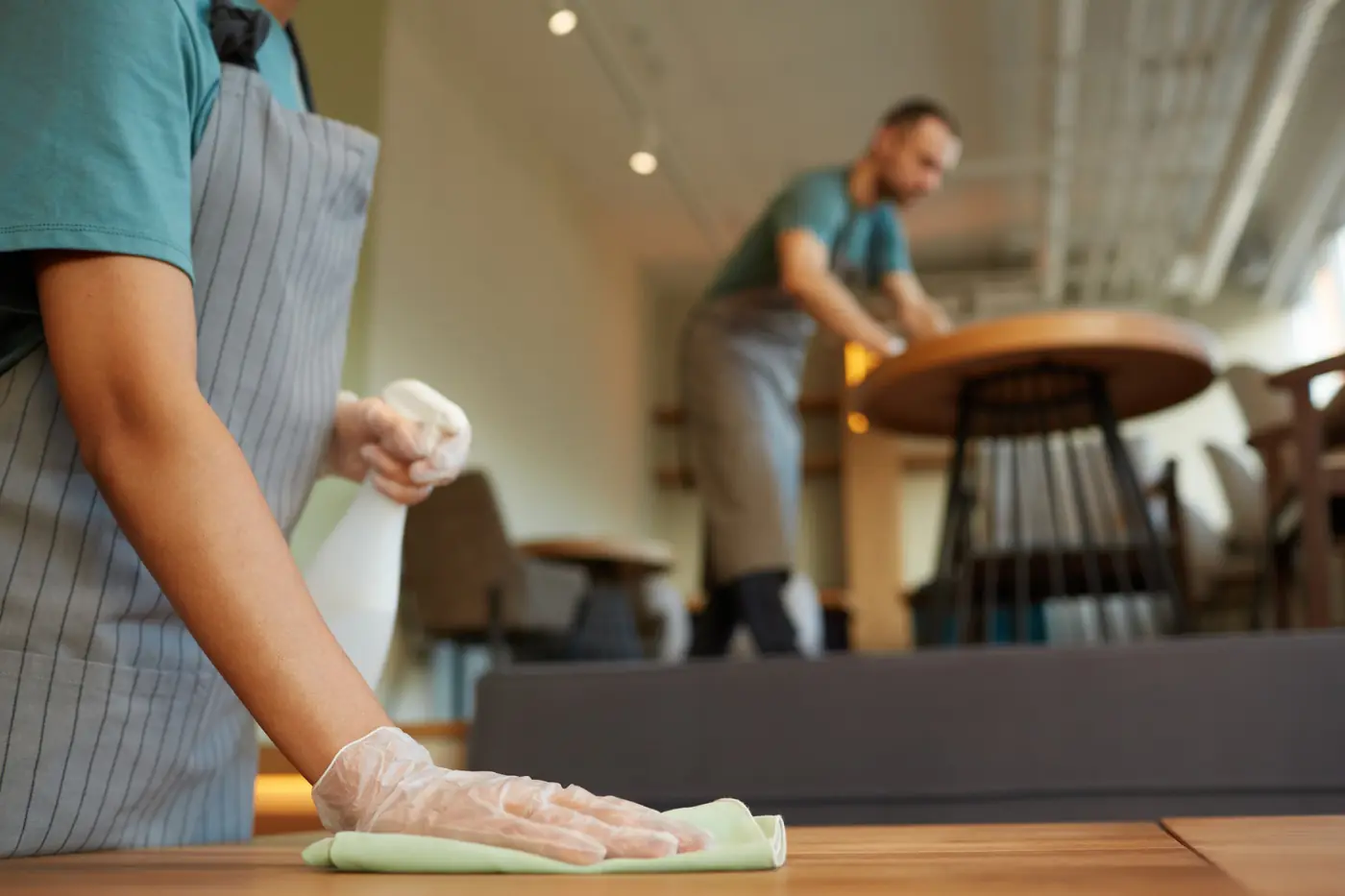
- Wipe tables, chairs, booths, and counters
- Clean and disinfect restrooms
- Sweep and mop floors
- Empty trash and recycling
- Clean entry glass and door handles
Weekly tasks
- Move and clean behind movable furniture
- Detail baseboards and corners
- Clean vents and light fixtures within reach
- Wipe down walls and splash zones
- Deep clean the host stand and waiting area
Periodic deep cleaning
Behind and under heavy equipment, inside storage areas, and the places staff rarely reach need a periodic deep clean, often before a reopening, a remodel, or a busy season. Hood and exhaust system cleaning is specialist work and is usually handled by a dedicated provider.
Inspections
Restaurant inspections are carried out by your local health department, and their requirements govern what your staff must handle. A professional cleaning team supports your routine, and your own food safety procedures stay in place. Ask your health department what they look for if you are unsure.
Why after-hours cleaning works
Cleaning after close means no noise, wet floors, or chemical smells during service, and the dining room is ready for the next day. Many restaurants pair daily staff cleaning with a professional team a few nights a week.
Dividing the work between staff and a cleaning company
Most restaurants split cleaning into two lists. Kitchen staff handle food-contact surfaces and equipment as part of their procedures. A cleaning company handles the dining room, restrooms, entry, windows, and floors, and sometimes agreed kitchen areas.
Writing the split down prevents gaps and double work. It also shows an inspector that every area has an owner.
Why restrooms and entries deserve extra attention
Guests judge a restaurant by its restrooms and entry before they taste anything. Fixtures, mirrors, floors, and dispensers should be cleaned and stocked every day. Glass doors, handles, and mats set the first impression and are easy to miss.
A scope that names these areas, with a frequency for each, keeps them from slipping on busy weeks.
We are a woman-owned, faith-based cleaning company in Youngstown, Ohio, led by founder Diana Isabella. These tips come from real jobs in homes, offices, and churches.
Common mistakes to avoid
- Treating deep cleaning as optional until a problem appears.
- Mixing cleaning chemicals or using the wrong product on food-contact surfaces.
- Skipping documentation of cleaning tasks.