Key takeaways
- Cleaning removes dirt, sanitizing lowers germs, and disinfecting kills germs with a chemical.
- Clean first, then disinfect.
- Follow the label contact time on any disinfectant.
- Disinfect high-touch points and restrooms, not every surface.
The short version of each term
Cleaning is the physical removal of dirt, dust, grease and some germs using soap or detergent and water. Sanitizing lowers the number of germs on a surface to a level considered safe by public health standards. Disinfecting uses a chemical product to kill germs on a surface. The CDC describes these as three separate steps, and it recommends cleaning first because dirt can get in the way of a disinfectant.
Why the order matters
A disinfectant cannot do its best work on a dirty surface. Soil and grease shield germs from the product. That is why a good cleaning visit starts with wiping and scrubbing, and only then moves to disinfecting the places that need it, such as restroom fixtures, door handles and shared touch points.
What contact time means
Every disinfectant label lists a contact time. That is how long the surface must stay visibly wet for the product to work. If the surface dries sooner, the product may not have done its job. Reading the label and following it is the single most useful habit for anyone using these products.
Which one your space needs
- Offices: clean every visit, disinfect restrooms, break rooms and high-touch points on a regular schedule.
- Restaurants and food service: cleaning and sanitizing of food-contact surfaces follow your local health department rules, so confirm those rules with your inspector.
- Churches: focus on pews, nurseries, restrooms and fellowship halls, with extra attention before busy services.
- Homes: regular cleaning handles most needs, and disinfecting is useful for bathrooms, kitchens after raw food, and after illness.
Natural products and disinfecting
Not every product that cleans well is a registered disinfectant. At Back To The Garden Cleaning we clean with our own all-natural cleaning solution, made in Ohio. If your space needs a registered disinfectant for a specific purpose, tell us in your FREE estimate and we will put the product and the scope in writing.
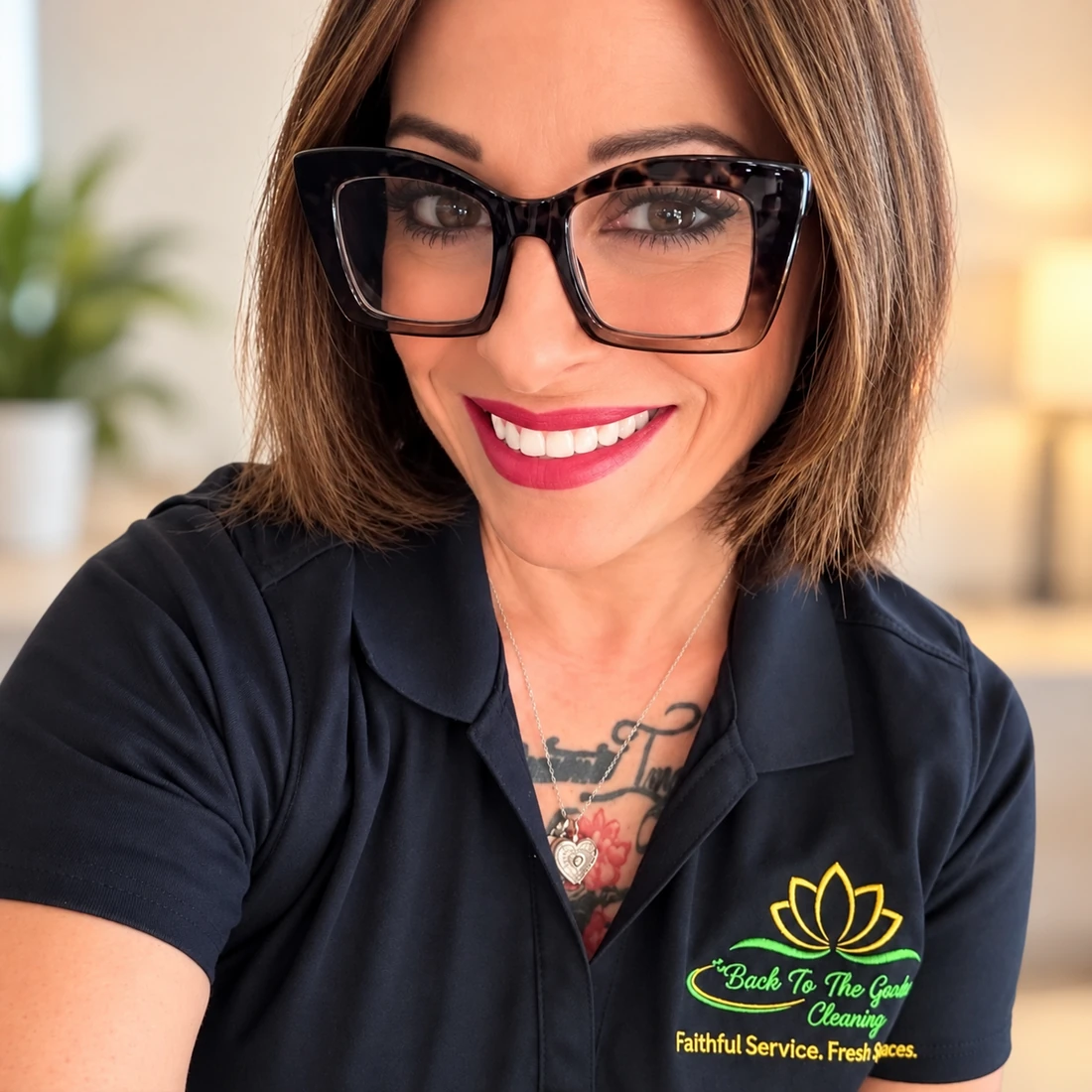
We are a woman-owned, faith-based cleaning company in Youngstown, Ohio, led by founder Diana Isabella. These tips come from real jobs in homes, offices, and churches.
Common mistakes to avoid
- Spraying a disinfectant and wiping it away immediately.
- Disinfecting a dirty surface without cleaning it first.
- Mixing cleaning products, especially anything containing bleach with other cleaners.
- Assuming one product does all three jobs.